

Travel is literally hard work
The RobWords Newsletter

Welcome to a shorter-than-usual RobWords Newsletter, as I am Edinburgh-bound.
TRAVEL
It’s hard work.
I’ll admit that this choice wasn’t random. I’m sipping a pint of pilsner in departures at Berlin airport with a sign in front of me that says “TRAVEL VALUE: DUTY FREE”. This reminded me that travel has taken its own etymological journey.
Occasionally, in English, we’ve taken two spellings of the same word and apportioned different meanings to each of them. One example of such a pairing is grammar and glamour, which we discussed a few weeks ago (both are takes on gramaire). Another is travel and travail.
If you’ve ever attempted to learn French, you’ll perhaps already know that travailler means “to work” and le travail is “the work”. The English word travail represents a straight-up borrowing of this. When we talk of our travails, we speak of our efforts.
Back in the late medieval period, crossing continents wasn’t as simple as hopping on an Easyjet – it was hard work. Hence, to journey far was to travail. Here’s Shakespeare using it to mean precisely that.
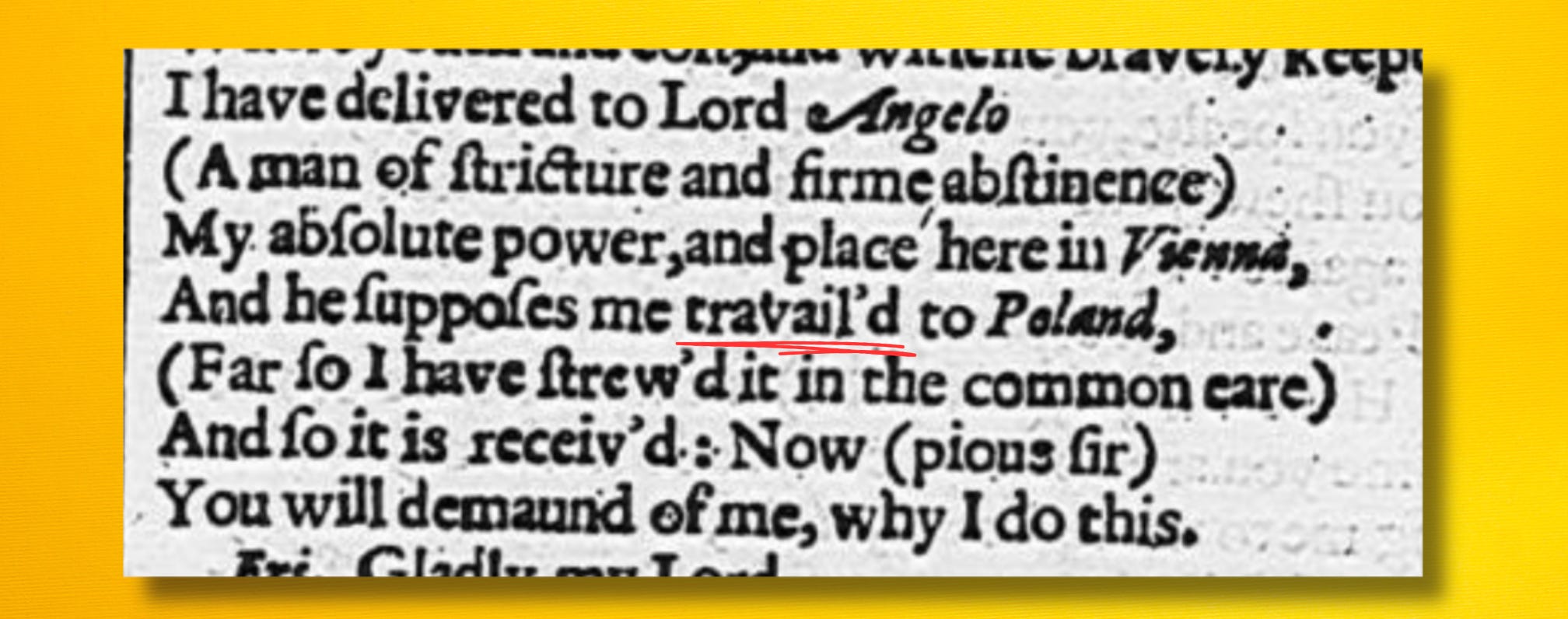
Travail was spelt a variety of ways, including travaile, travayle, and travel. Over time, the latter became the preferred form for discussing the exertions of moving from A to B. Meanwhile, travail was retained to describe other forms of toil.
BONUS TRAVEL ETYMOLOGY
Our word journey is from the French journée, which simply means “day”. Originally a journey was how far you could go in a day.
In the Middle Ages it was generally assumed you could walk 20 miles between waking up and going to bed, so a 100-mile trip would have been five “journeys”.
IT’S OPENING NIGHT!
On Thursday I begin my 11-night run at this year’s EDINBURGH FRINGE.
If you’re in town, come see me at the Assembly George Square Studios (Studio 3). If you’re not in Edinburgh but know someone who is, send them my way for an hour of wordy nerdy fun.
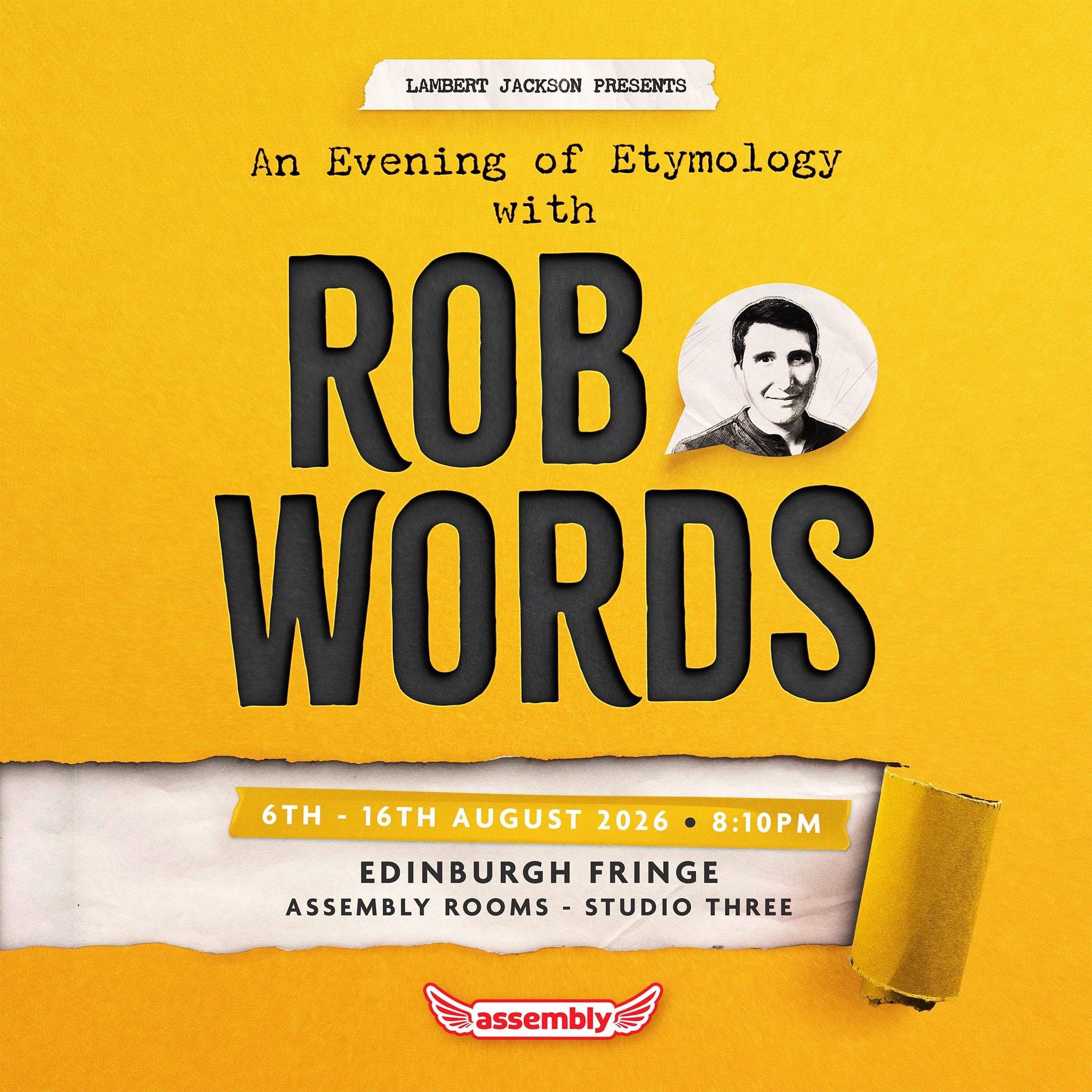
I’ll be on at 8.10pm every night from from 6th to 16th August.

Does ‘Abracadabra’ mean anything?
Take a pinch of witchcraft, add a touch of sorcery, and "Hey presto!" you have a wordy nerdy episode about magical terms.
🧙 Can only women be witches?
🔒 What did a warlock originally do?
🪄 What language is 'Alakazam'?
These questions answered – and many more – in another enchanting edition of Words Unravelled. Watch or listen below.
Right – my flight is boarding. I’ll be back with a full newsletter next week. In the meantime, don’t travail too hard.
Hope your travel is not travail. How many months would it have taken you to walk and then be impressed on a ship to Scotland?
Among those of us who studied talmud, recognizing "abra kedabara" was trivial. Personally, I did it just by seeing the words, because I (and any other student of the talmud) have been reading Judeo-Aramaic since childhood. Like asking someone familiar with French when they noticed that "Je créerai selon ma parole" meant the same thing.
That said, these words aren't particularly Judeo- they would be the same in Imperial Aramaic. But... magicians in a Christian culture are more likely to have used our dialect. The principal text of Cabbalah, the Zohar, is also in Judeo-Aramaic (but in the Israeli dialect, the Talmud is Babylonian), and alchemists were busy with concepts like Chrisitan Kabbalah.
Breaking down the words into roots and prefixes
a- = I will
bra - create
ke- like
dabra - speech
All together: "I will create according to my speech."
(Hopefully the French says the same thing.)
JK Rowling must have "gotten it", because her "avda kedabra" is "I will destroy according to my speech".