Enjoy these juicy segments, rich in word facts and language fun.
ORANGE
A pithy explanation
The colour is named after the fruit.
The first mentions in English of the waxy citrus orbs come from the 1400s when the word – and the fruits themselves – were imported from France.
1470
“Dame Elyzabet Calthorp is a fair lady and longs for oranges, though she be not with child.”
– J. Paston, Paston Letters and Papers of the Fifteenth Century
There’s a town in southern France called Orange, and it bore the name before the first oranges arrived. So the fruit and town are not related, however, the former may have influenced the spelling of the latter.
The names of the town and fruit became conflated, perhaps because of the French tendency to call oranges a pommes d’orenge, “apples of orange”. This was in fact a translation of other Romance names for the citrus such as the Italian melarancio, which also meant “apple of orange”.
Something else of note happened to the orange in French and Italian. Here is the chain of custody of the word, which neatly traces the trade route that brought the fruit to Europe:
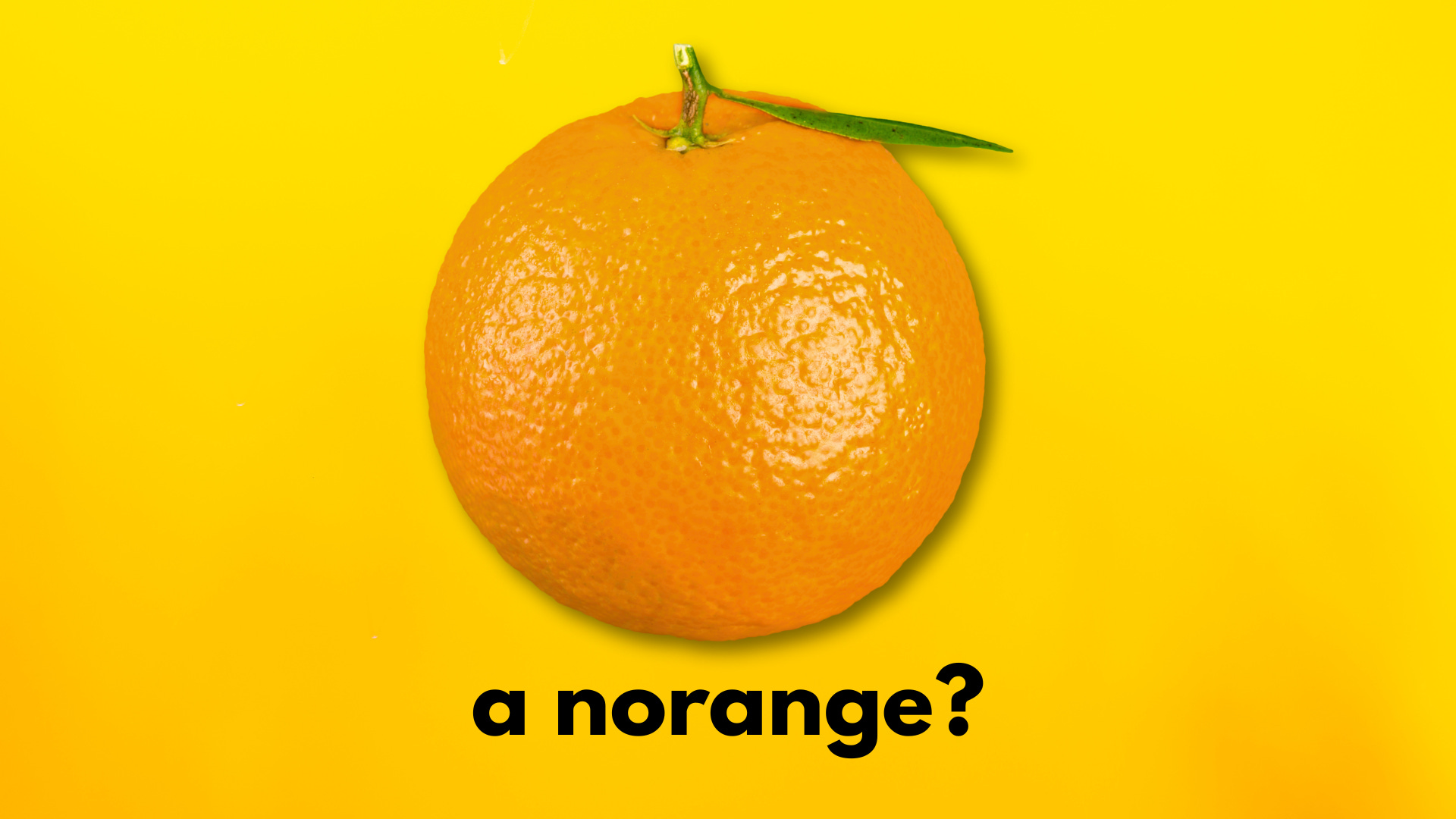
Notice anything? All the older words begin with an N. The orange is thought to have shed that N in Italian and French in much the way the word umpire lost its N in English: because the Ns were confused with the indefinite article.
una narancia> un’arancia and une norange> une orange, much as a numpire > an umpire.
The same thing could just as easily have happened had the word norange ever entered English (a norange>an orange) but there’s no evidence that it ever did. However, having continued its journey up through Britain, the word did regain its N in Scotland, where it was sometimes called a nirrangein Scots.
CURTAIN-LECTURE
Meaning: An argument in bed
Curtain-lecture appears in Samuel Johnson’s famous dictionary of 1755, defined as “a reproof given by a wife to her husband in bed”.
Johnson supports his claim that the term is worthy of a place in his great work by including a couple of examples of its use. One of them is this couplet penned by England’s first Poet Laureate, John Dryden:
1692
What endless brawls by wives are bred! The curtain-lecture makes a mournful bed.
– John Dryden, Juvenal’s Sixth Satire
I don’t think we need to limit ourselves to the stereotypical scenarios cited above. A bedtime rebukecould clearly be delivered by any irritated lover to their significant other.
USE IT TODAY
The ancient origins of our terms for technology
In our podcast Words Unravelled, Jess Zafarris and I have been exploring words from the world of tech, sci-fi and the internet age.
It’s a particularly nerdy one. Think you can handle it? Watch or listen below.
Can you pick the correct definition of the word below?
WATCHET
A light blue
A terse warning
A tiny timepiece
An early television
I’ll put the solution at the end of the newsletter.
The Citrus Syllabus
We’ve looked at the ancient origins of the word orange, but what of the many other mottled, orange-coloured occupants of the fruit bowl?
MANDARIN – Originally mandarin orange, it’s technically a different citrus fruit to the common orange. Its name hints at where it was first cultivated: China. In Imperial China, members of the official class were known as “mandarins”. There are a couple of theories why the fruit was named after them (in Europe, anyway). One is that its unique hue was reminiscent of the mandarins’ bright robes. The other is that they were adjudged to be of a “higher class” of Chinese orange.
SATSUMA – Japan is also an excellent place to grow mandarin oranges. Those exported to the West from the southwestern Japanese island of Kyushu were named after the port from which they were dispatched. That port was in Satsuma Province.
TANGERINE – The tangerine is also named after a port: Tangier in Morocco. We borrowed the word from French, in which the city is called Tanger. Originally it referred to anything from Tangier, however when a juicy new mandarin started to arrive in Europe and the Americas in the 19th century, it was named the Tangerine Orange. Side note: in the US, a tangerine is sometimes a hybrid of a mandarin and a pomelo.
CLEMENTINE – The clementine is a hybrid wherever you happen to be eating it. This cross between a mandarin and a sweet orange was first cultivated by a French missionary in his garden in Algeria. His name was Clément Rodier.
WATCHET
A light blue
Watchet was in use from the 15th century all the way to the 19th century. It was borrowed from a dialect of Old French, in which it was wachet.
Thanks for reading. Subscribe for free to receive new posts and support my work.