
Which direction is 'awkward'?
The RobWords Newsletter

Welcome to another RobWords Newsletter. Coming up:
ETYMOLOGY ROULETTE – awkward
VOCABULARY EXPANDER – arseward
Words for Weirdness
And much more.
Now, let’s fill that uncomfortable silence in your head with some word facts and language fun.

AWKWARD
Something’s a bit off.
Awkward is a direction.
It follows precisely the same formula as forward and backward, however instead of going toward (that’s another one) the fore or the back, we’re heading in the direction of awk.
Awk is an obsolete word – borrowed from the Vikings’ language, Old Norse – meaning “off” or “wrong” (it could also mean “left handed”. Awks…).
Here it is in a 16th century poem about how to be a good husband:
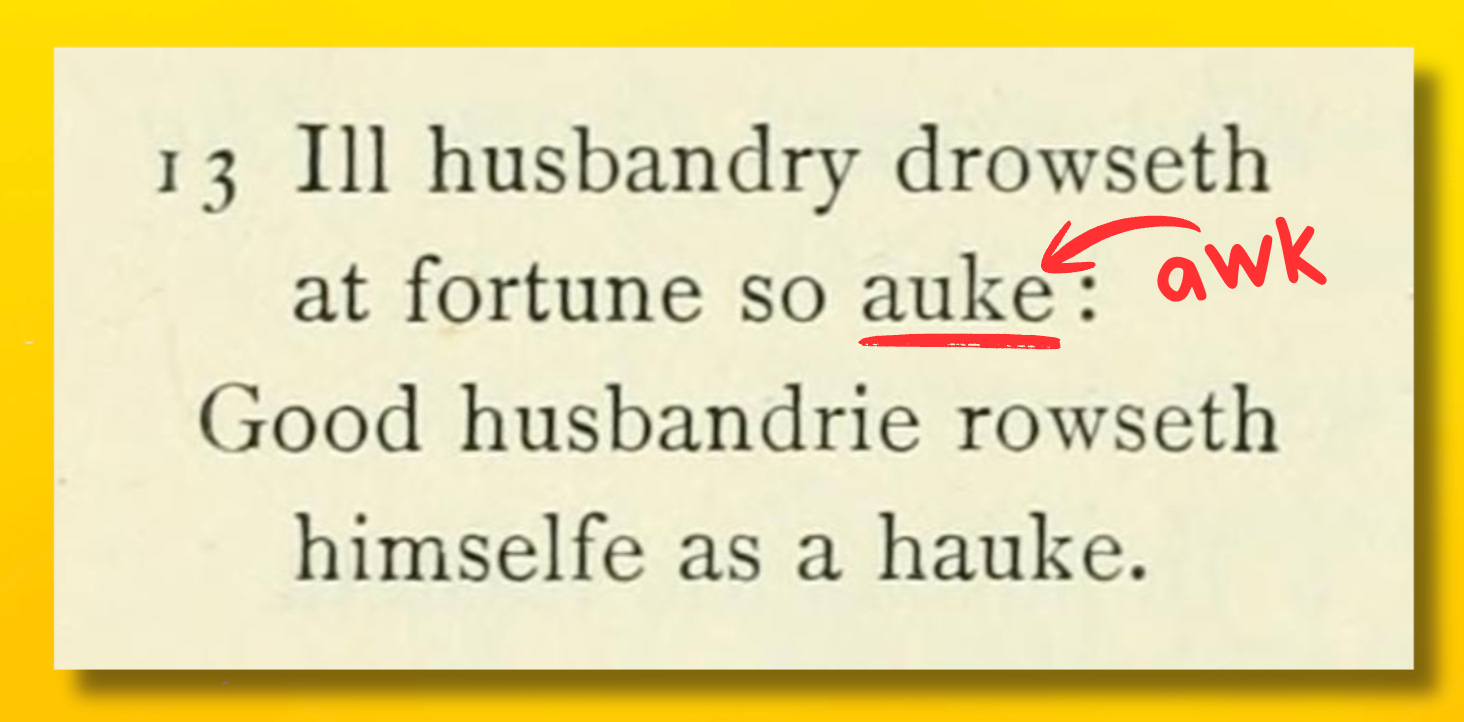
So, awkward originally meant to be “the wrong way round”. From there, it only takes a tiny step to get to “ill-fitting”, which is the sense we use both literally and figuratively today.
BONUS FACT: In his famous 1755 dictionary, Samuel Johnson complains about the word awk being used instead of awkward, describing it as a “barbarous contraction”. I doubt he’d be a fan of awks either.

ARSEWARD
MEANING: Back to front
Here’s another awkward direction for you: arseward.
It very literally means “towards your arse/ass” and was used in Middle English to describe something that was pointing the wrong way.
It was still in use in the 17th century as the poem below attests.
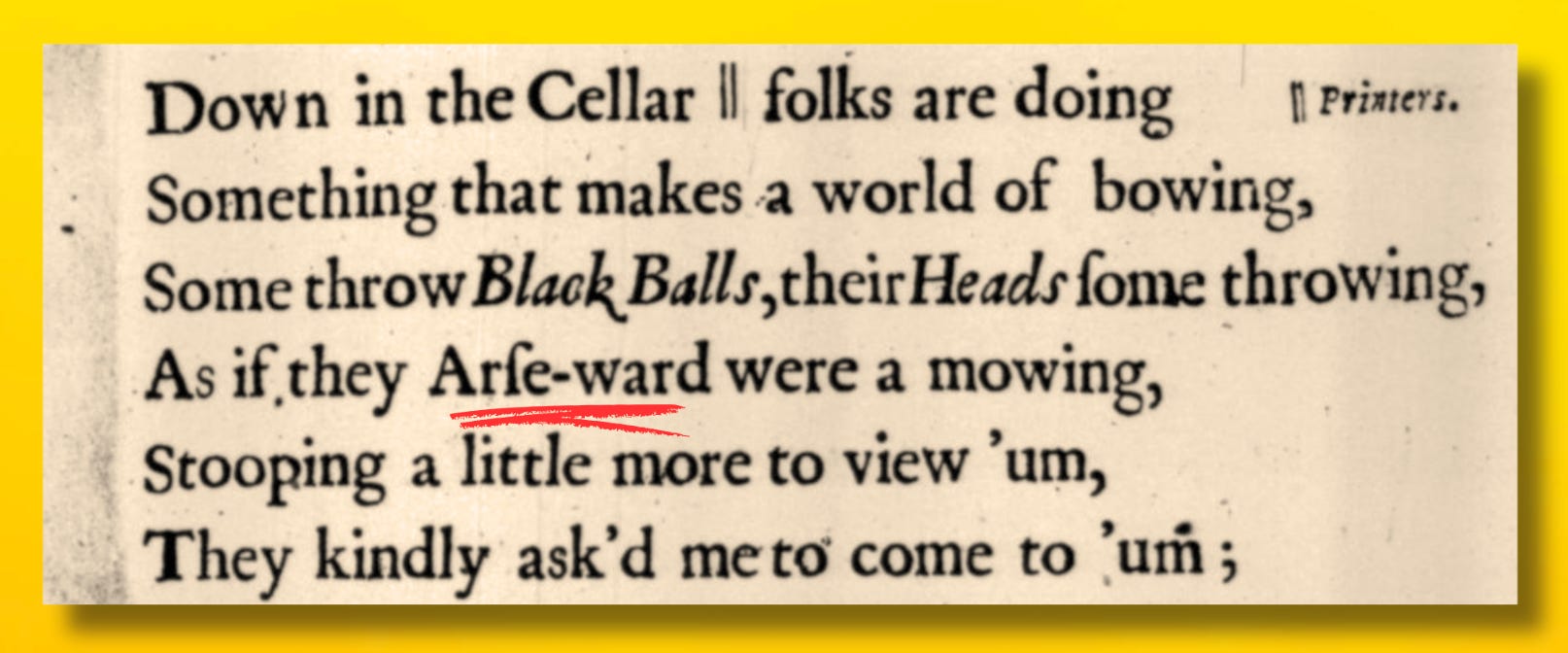
Its literal meaning is almost identical to backward, but by invoking the posterior it has some extra bite. “Keep your mouth shut, you’ve got the whole thing arseward!”
USE IT TODAY

A couple of weeks ago I flagged up this nerdy word game
Nine Lives challenges you to guess the correct origins of thousands of idioms. It has been brilliantly researched and is a lot of fun.
It’s nearing the end of its Kickstarter campaign but the creator Alex still needs a few more backers to bring it to market.
If you think you’d enjoy it (and if you’re reading this, you probably would) why not pledge a few pounds/dollars/euros here and help get it over the line.


What does Häagen-Dasz even mean?
Author Jess Zafarris and I have been exploring the origins of brand names, including Coca-Cola, Pepsi, Adidas and IKEA.
Watch or listen to the latest episode of Words Unravelled below.

Can you identify the correct definition of the word below?
ZIMME
A jewel
A walking aid
To move with speed and energy
A Renaissance musical instrument
I’ll reveal the solution at the end of the newsletter.
Words for Weirdness
We’ve already explored the oddities of awkwardness. Now let’s investigate a few more words for when something isn’t quite right.
WEIRD – From an Old English word meaning “become”, weird originally referred to something that had the power to control fate or destiny. Shakespeare’s “weird sisters” were so-called because they were clairvoyant – like the Fates of Greek mythology – not because they were a bit strange.
STRANGE – The Old French estrange, from which we get strange, meant “foreign” (as does its modern French descendant étrange). When we call something “strange” we’re ultimately describing it as unfamiliar, otherworldly, or literally outlandish.
BIZARRE – Bizarre is thought to perhaps come from the Basque bizarra meaning “beard”. This was borrowed into Spanish as bizarro and took on the meaning of “handsome” (because apparently what bearded man isn’t?). For unknown reasons, French speakers altered its meaning to “odd”, before giving us their version: bizarre.
ZANY – Zani is one of the stock characters in the Italian commedia dell’arte. The practical joke-loving peasant gained notoriety in 16th century England, and an eccentric individual came to be referred to as “a Zani”. Over the centuries, the word morphed from a noun to an adjective, so that we now refer to such a person as simply “zany”.
WAYWARD – Another -ward word for you. This likely started off as awayward, explaining why it describes something that deviates from what is proper or reasonable.

ZIMME
A jewel
This word emerged as a result of a 19th century misreading of the Middle English ȝimme. The first letter should be read as a G, giving an ancestor of our word gem. However, it was erroneously understood to be a Z. The same mix-up is responsible for the Scottish name pronounced “mingiss” being spelt Menzies.