Welcome to another RobWords Newsletter. Coming up:
ETYMOLOGY ROULETTE – okay
VOCABULARY EXPANDER – poop-noddy
Initialisms and acronyms
And much more
I sincerely hope you’ll find this week’s word facts and language fun more than satisfactory.
OKAY
O.K. Let’s talk about ‘okay’.
You can stop writing okay if you like. Save yourself the extra effort. OK is truer to the term’s origins and a full two characters shorter.
OK appears to have originated in the US as part of a highly localised fad. In the late 1830s, writers at the Boston Morning Post took to littering their copy with strange initialisms.
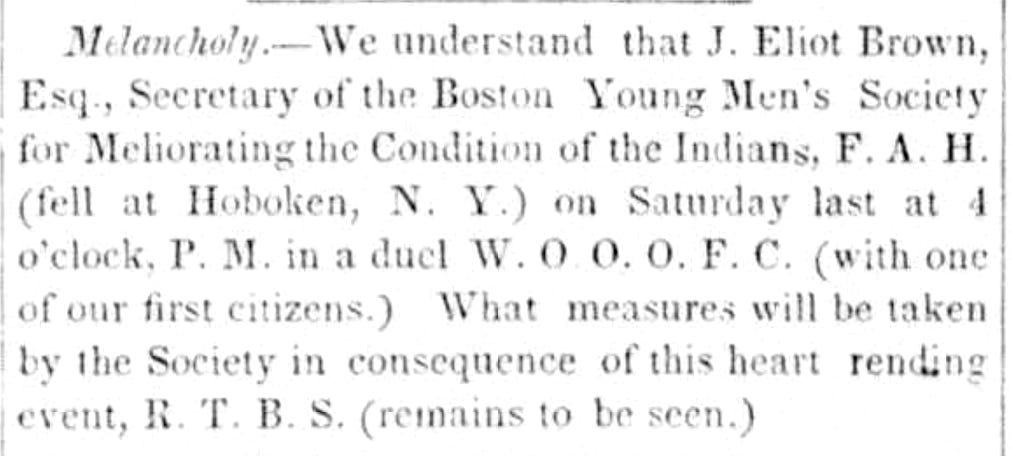
One Tuesday in June of 1838, readers were confronted with this on page 2:
The inclusion of the explanations in brackets clearly wipes out any space-saving benefit of the initialisms, but presumably they were training their readers up for the sake of future ink conservation.
As the newsroom craze developed, the reporters started even to take liberties with their choice of letters. For example, the term “all right” was rendered O.W. Why? Because it stood for “oll wright”. Geddit?
It was in the midst of this madness that on March 23, 1839, the following appeared in a published letter from the BostonMorning Post’s editor, criticising his counterpart at the rival Providence Journal:
“He of the Journal, and his train-band, would have the "contribution box," et ceteras, o.k–all correct–and cause the corks to fly, like sparks, upward.”
And there it is. The first known appearance in print of O.K. – standing for “oll korrect”.
The adoption of O.K. by supporters of President Martin “Old Kinderhook” Van Buren in the following year’s election campaign helped to spread the term nationwide.
Now it’s one of the most recognisable English words, understandable even to many non-English speakers. The form okay appeared around the turn of the 20th century – as an overcorrection or perhaps inspired by one of the false stories of OK’s origins. So, to explain this newsletter’s cheeky headline: O.K. is not short for okay, rather okay is long for O.K.
The above take is perhaps not the one you’ve previously heard. Maybe you were told OK was from the Choctaw interjection okeh, or from the Haitian port of Aux Cayes, where the navy rum was particularly prized.
Otherwise, you might have heard the claim it’s from the (non-existent) industrialist Otto Kaiser who would chalk his initials onto products that met his exacting standards, or that delicious army biscuits supplied by O. Kendall & Sons are the source.
These theories continue to do the rounds some 60 years after research by Columbia University’s Allen Walker Read uncovered the Boston Morning Post fad, and should have put them all to bed. It’s true that many of them are easier to believe than the idea it stands for “oll korrect”.
However, that’s where the evidence leads, so I’m going with it. I hope that’s OK.
POOP-NODDY
Meaning: doing “the other thing”
Poop-noddy was a 17th century term for sexual intercourse. As was “the other thing”.
I stumbled across this one while researching an upcoming episode of Words Unravelled about love and lust.
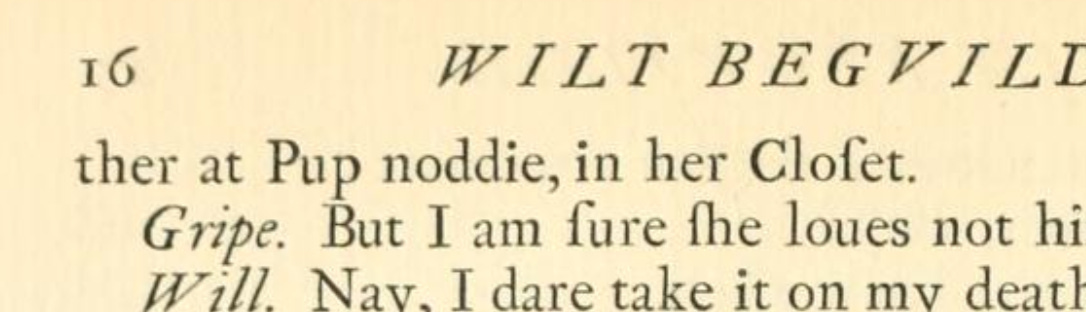
1606
“I am sure I saw them close together at Pup noddie, in her Closet.”
– Wily Beguiled (play)
Poop-noddy literally means “deceive the fool” but for some reason it came to refer to making the beast with two backs. I suppose it’s no stranger than saying "a bit of ‘how’s your father?’”
So, as long as you’re okay with speaking of poop and nooky in the same breath…
USE IT TODAY!
Does anyone know what “London” means?
In our latest podcast, Jess Zafarris and I have been exploring the origins of city names.
From L.A. to New York, from Glasgow to Southampton, we’ve scoured the US and the UK for the most fascinating etymologies. Watch or listen below.